
Horry County Sex Offender Checks
The public starting point is the South Carolina Sex Offender Registry, often called SCOR. The South Carolina Law Enforcement Division manages that statewide search. Select Horry in the county field for a broad local list, or narrow the request with a name, city, ZIP code, or address. The results are free. They are separate from the paid CATCH criminal-history product and should be treated as their own record source.
The Horry County Sheriff's Office handles registration and verification for people who reside in Horry County. Its dedicated registry line is 843-915-8573. Call that unit when the question concerns a local registration duty, an address that may be stale, or suspected noncompliance. A state profile and a sheriff contact serve different needs. The first provides published data. The second routes a current local concern to the office responsible for verification.
The manifest's official SCOR source shows the statewide search entry without identifying a private person.
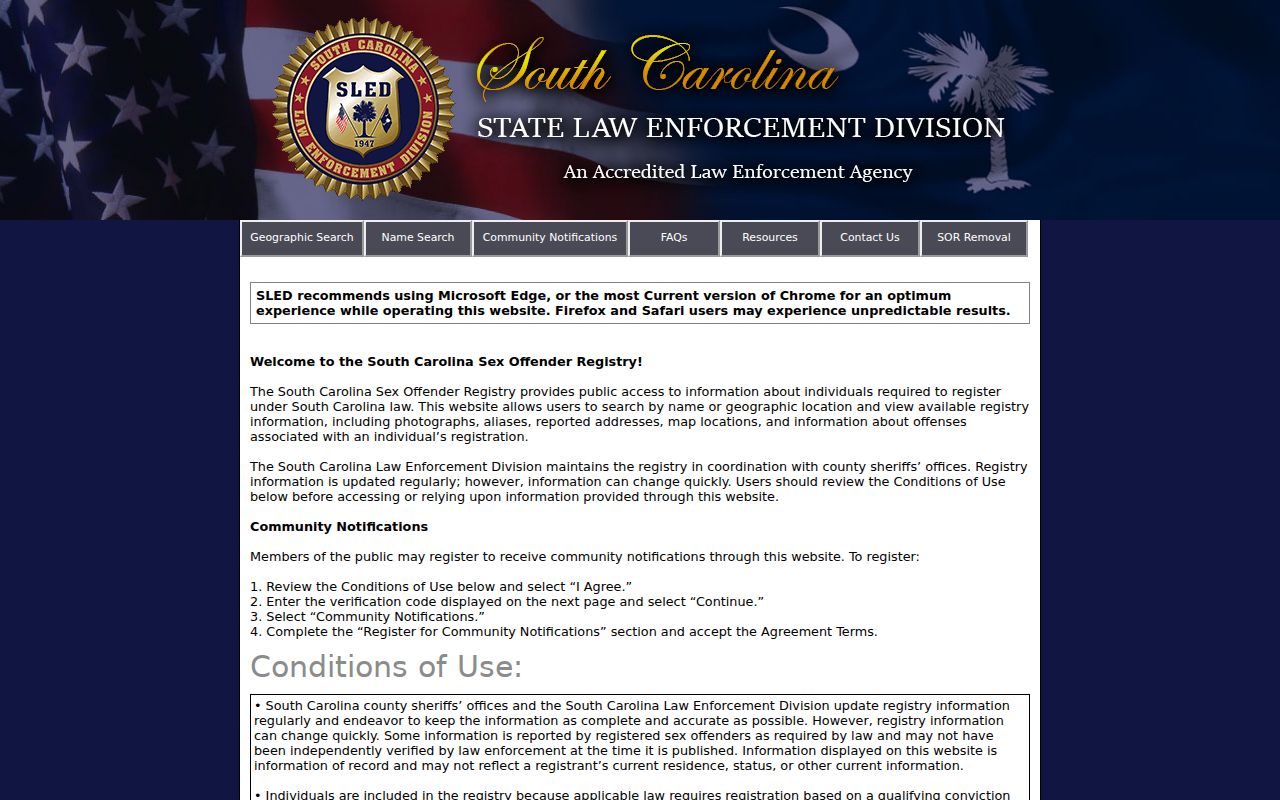
That search screen is the right place to begin a Horry County registry check because it supports both name and geographic paths.
SCOR and Horry County CATCH Results
SCOR and SLED CATCH are not two views of the same database. SCOR publishes authorized sex offender registration information. CATCH returns a name-based South Carolina criminal history supported by fingerprint submissions, and its terms say wanted-person and registry information are excluded. Paying for CATCH will not produce the public sex offender registry result. Use SCOR for registry status and CATCH only when the separate statewide criminal-history question is relevant.
This distinction also explains why the two systems can show different facts. A registry profile focuses on the qualifying offense, registration status, residence, physical description, and verification information. A repository history organizes arrest and disposition cycles. Neither replaces a court file. If the disposition itself matters, consult the Horry Public Index or the Clerk rather than drawing a conclusion from a registry label.
The SLED agency page captured for this project provides the agency context behind both products.
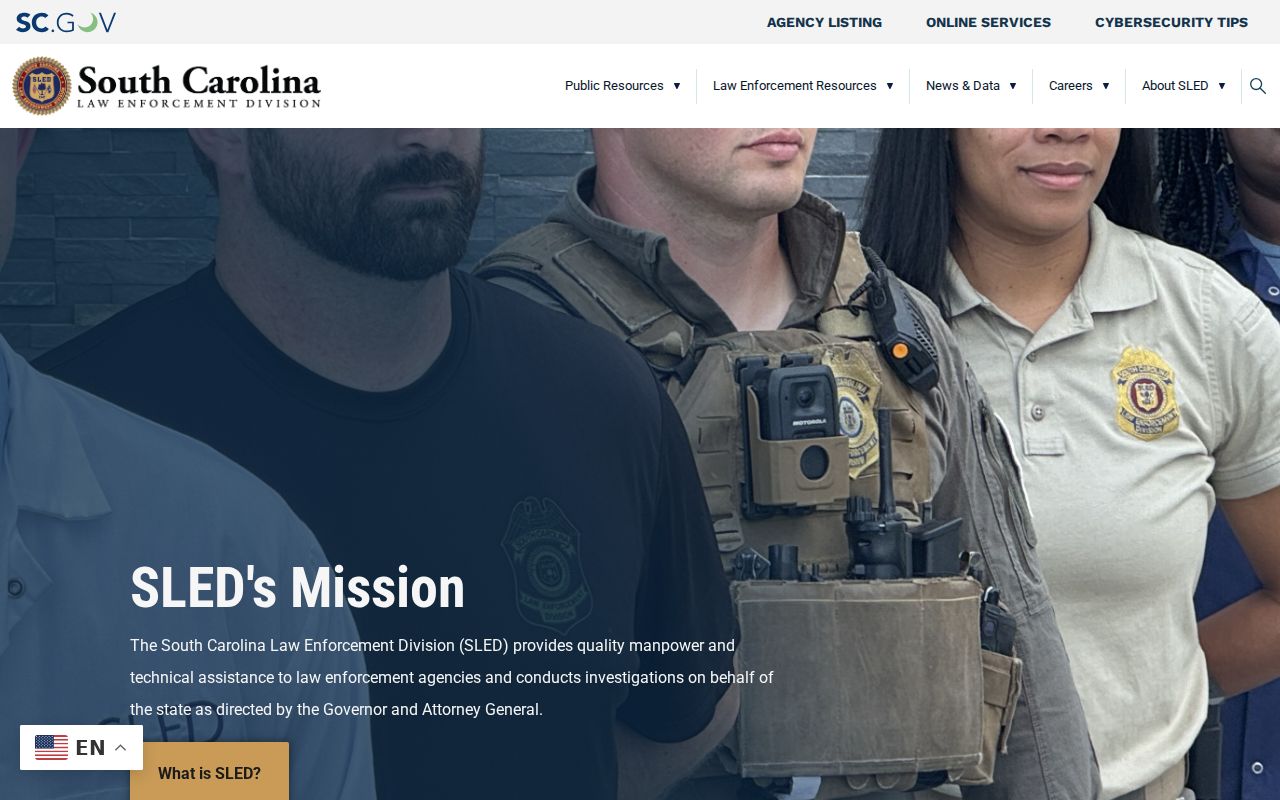
The agency view reinforces that registry publication and statewide criminal-history dissemination are distinct SLED functions.
Note: An empty CATCH result does not clear a person from SCOR, and an empty SCOR result is not a complete criminal-history check.
South Carolina Sex Offender Registry Searches
Start with the broadest reliable fact. An exact name works when spelling and aliases are known. County, city, or ZIP filters are often better for community awareness. Address and radius tools help examine an area, but the displayed range must be selected from the options SCOR offers. Search variations matter because one spelling or boundary choice can suppress a relevant result.
- Open SCOR and read the conditions governing public registry use.
- Enter a name or choose Horry County, a city, ZIP code, or address-based search.
- Compare aliases, the current photograph, physical details, and location before matching a person.
- Open the full profile and review offense, residence, registration, and verification fields together.
The available search controls support both person-based and place-based checks. A field marked conditional is needed only for that search path.
| Field Label | Type | Required | Notes |
|---|---|---|---|
| Last Name | Text | Conditional | Spelling affects a name search |
| First Name | Text | No | Narrows a last-name result |
| County | Dropdown | No | Select Horry for a county list |
| City | Text or dropdown | No | Uses the registered city |
| ZIP Code | Text | No | Five-digit geographic filter |
| Address | Text | Conditional | Starts a proximity search where offered |
| Radius | Dropdown | Conditional | Uses the portal's offered distances |
| Map or List | View control | No | Changes the result display where enabled |
Fixing Horry County Registry Searches
No result is not proof that no registrant is connected to an area. Check spelling, reverse first and middle names when appropriate, and try a known alias. Then widen the geography. A postal city may not match the legal place used in a record, especially around Horry County's coastal cities and unincorporated areas. Select Horry County after a narrow city or ZIP attempt.
Address searches also require care. A profile reflects registered information and its update timing. It does not label every person who lives at that property, nor does it prove that each resident committed an offense. Match the profile itself, not the street alone. When published information appears stale or a registration duty may have been missed, call the Sheriff's registry line instead of trying to investigate or confront anyone.
Registry Profiles: What They Show
A Horry County registry profile groups identity, location, offense, and compliance fields in one public record. The photograph and physical description help distinguish similar names. Aliases and registry identifiers offer a second check. Read residence and status next, then review each qualifying offense with its statute, jurisdiction, and conviction date. Some profiles also display vehicle information, sentence data, or marks and tattoos when those fields are public.
| Name and Aliases | Reported name, other names, and registry or state identifiers |
|---|---|
| Photo and Description | Current photograph plus sex, race, age or birth display, height, weight, eyes, hair, and identifying marks |
| Registered Residence | Published residence, county, and registration status |
| Offense and Statute | Qualifying description, code section, jurisdiction, conviction date, and sentence data where posted |
| Vehicle Data | Public vehicle details where the profile supplies them |
| Verification Status | Registration dates, compliance status, and verification information made public |
The project image from the official South Carolina statutory source supplies legal context for those published registry fields.
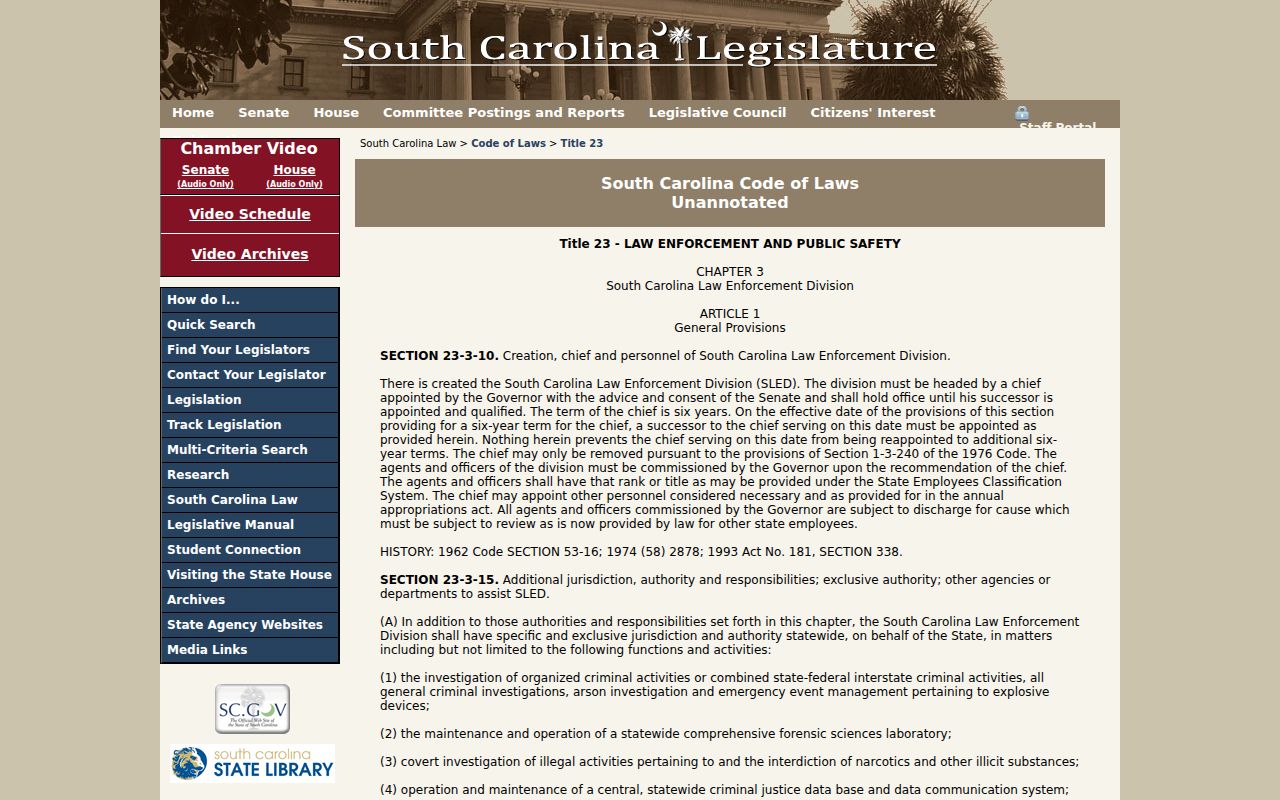
The statute is the controlling source for eligibility and duties; the profile is the practical public display of those rules.
NSOPW for Horry County Searches
The National Sex Offender Public Website adds a cross-state layer. It searches participating jurisdiction records through a federal entry point. That is useful when a person recently moved, an address history spans state lines, or the relevant place is uncertain. It does not replace SCOR for a focused South Carolina inquiry, and it does not make the Horry sheriff the custodian of another state's entry.
Use both systems in sequence. Search SCOR with Horry filters first. Then run NSOPW with the same name and geographic facts when the concern reaches beyond South Carolina. Compare the source jurisdiction and profile identifiers before assuming two results belong to one person. Questions about a South Carolina profile go to the South Carolina or Horry office responsible for it.
The manifest's official NSOPW capture shows the national search layer without selecting a registrant.
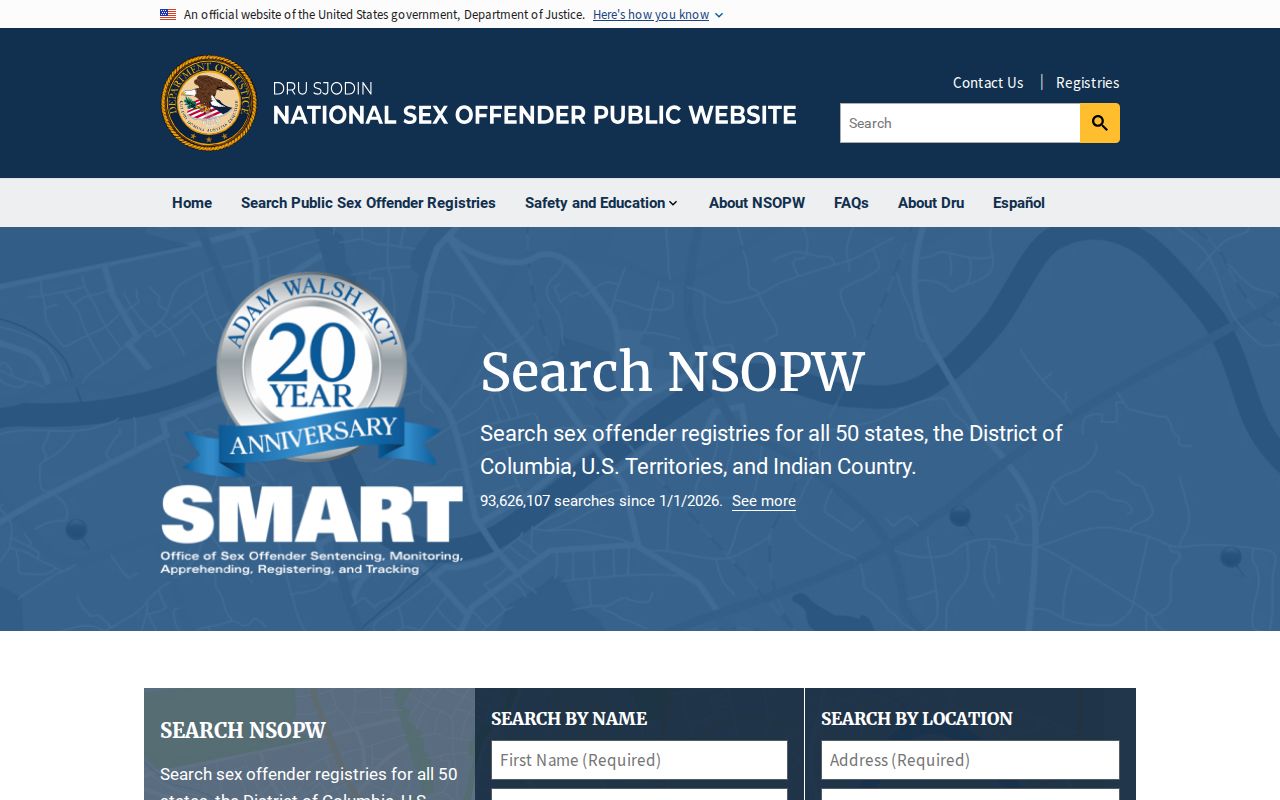
This second search is most useful as a boundary check after the more precise Horry County and South Carolina review.
Registration Levels and Duties in South Carolina
South Carolina groups qualifying offenses in Tier I, II, and III under S.C. Code §23-3-430. A tier is a statutory offense category. It is not a simple prediction of risk. Section 23-3-460 sets a lifetime-registration baseline and ordinarily requires verification during the birth month and again six months later. Sexually violent predators and federal SORNA Tier III registrants verify every 90 days through the responsible local sheriff.
Section 23-3-462 provides limited petition routes. A qualifying Tier I registrant may ask for termination after 15 years, while a qualifying Tier II registrant may ask after 25 years. Relief is not automatic. Adult Tier III registrants cannot use that subsection. Conditions include treatment completion, no failure-to-register conviction during the prior ten years, and no later sexual or violent-sexual offense. SLED may charge up to $250 and has 120 days to decide a request.
| Level | Duration | Verification |
|---|---|---|
| Tier I | Lifetime baseline; eligible request may begin after 15 years | Ordinarily twice each year |
| Tier II | Lifetime baseline; eligible request may begin after 25 years | Ordinarily twice each year |
| Tier III | Lifetime; adult Tier III has no §23-3-462 petition route | Ordinary rule varies by status; federal SORNA Tier III verifies every 90 days |
| Sexually violent predator | Lifetime under the governing provisions | Every 90 days |
Note: Tier labels classify statutory duties and offense groupings; they should not be converted into a home-made score of future behavior.
Horry County Registry Verification
Local verification supplies the Horry County link in the statewide system. Registrants report through the sheriff, and the sheriff handles the schedule tied to each statutory category or status. SLED then publishes authorized statewide information. That flow helps explain why a concern about compliance belongs with Horry County, while a problem with the statewide portal itself belongs with SLED.
If an address, vehicle, name, or status appears inconsistent, record the profile identifier and the exact field at issue. Call 843-915-8573. Give the unit the observed facts and let trained personnel assess them. Do not visit the property, contact a registrant, or post an accusation. A careful report protects the caller and preserves a clean path for official verification.
The official Horry County Sheriff's Office app for Apple devices advertises registry access, booking and release search, forms, and agency notifications. No verified Google Play listing was found, so none is presented. The app is an extra official access channel, not a substitute for the dedicated registry line when a compliance concern needs review.
Horry County Sex Offender Distance Rules
South Carolina law includes a 1,000-foot geographic restriction for specified registrants and child-centered locations. The rule has statutory exceptions, so a map measurement alone cannot establish a violation. The qualifying status, type of location, timing, and any exception all matter. SCOR's address tools help with awareness, but the public map is not a substitute for an official measurement or legal determination.
For Horry County residents, the practical response is straightforward. Use the location search to understand the published record. Save the profile identifier and relevant address facts. Then contact the Sheriff's registry unit if those facts suggest a compliance question. This keeps enforcement with the office that registers and verifies local residents.
Using Registry Information Lawfully
Registry data supports personal, family, and community safety. It can inform awareness of published locations and help a reader recognize the official channel for a concern. It cannot prove that every person at an address is listed, and it should never be treated as an invitation to investigate someone in person. Current facts should be confirmed through the registry and the maintaining office.
The governing sex offender provisions appear in South Carolina Code Title 23, Chapter 3. Those rules work alongside the warning shown by the registry. Report suspected noncompliance to the Horry County Sheriff's Office. For an immediate threat, use the appropriate emergency channel. For a cross-state record, contact the jurisdiction named in the profile.
Use registry records lawfully: Harassment, threats, intimidation, or other unlawful misuse of registry information is prohibited and can be prosecuted under South Carolina law. Do not confront a registrant or household.